A GLIMPSE OF THE HISTORY OF LOURDUNAGARA (BASAVANAPURA – SEEGEHALLI) PARISH
The Beginning:
It must have been nearly 150 years ago that Mr. Daveedappa and his five sons migrated to Basavanapura from Kadasenahalli which is a village near Chintamani. Almost at the same time Mr. Papayya and his family members from Hosakote settled down in Seegehalli. It is the descendents of these two and their matrimonial alliances that is accountable for the Christian population of both Basavanapura and Seegehalli villages today.
In 1967 Kristu Jyoti College was established and the students of theology started having their acquaintance with the villagers in this area. Br. C. Thomas Sdb (later on as priest, he was working in Pungannur, AP), Fr. P.F. Joseph and others who belonged to the first batches of students rendered their services in organizing the social uplift programmes. “With a view to an organized and articulated service to the society, the Social Service Guild (SSG) of Kristu Jyoti College was constituted as a registered society on December 12, 1973….One red-letter day which marks the annals of this guild is the event familiarly styled: “Freedom at Midnight”, when on November 6th, 1975, thanks to the intervention of the members of the Social Service Guild, 40 families as bonded labourers (men, women and children) in Chicka Basavanapura” were set free.
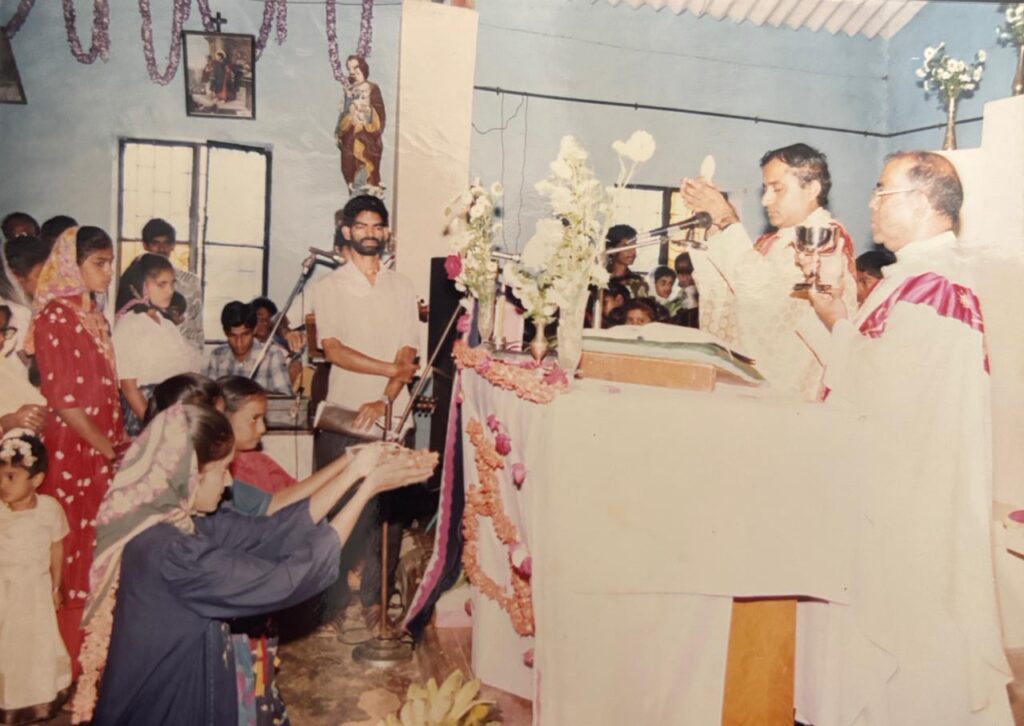
Eventually, in 1988, the mission station of Basavanapura – Seegehalli was constituted and Fr. Mathew Vadakel SDB was appointed as the first parish priest of the same. The socio-pastoral involvement of the Salesians has not ceased to exist ever since.
SOCIO-ECONOMIC WORKS AND PASTORAL EFFECTIVENESS:
Ever since the Salesian Fathers started the mission with the confidence and trust by the people of Basavanapura and Seegehalli, the Salesian touch was given very much to the people of this place. The brothers from KJC theologate, took up the re-evangelisation with a spirit of dedication and enthusiasm. The Mission, eventually grew upto a substation of St. Antony’s Parish at T. C. Palya. The people were spiritually animated and socially uplifted. The felt need of the time was the education of the young generation. The people were economically not sound and a conducive environment was absent for the children and the youth for their education. The people’s main occupation was agriculture or stone work as mentioned already. The meager income from agriculture and stone cutting was in no way sufficient for a decent living and more so for educating their children.
In order to meet this requirement, the brothers from KJC, through the SSG, organized night classes for the children of this place by building a small hall on the donated land. They also got some scholarships and sponsorships from various agencies in India and abroad. Through this constant and hard effort most children were enrolled at the nearby private or state run schools. This brought about a great change in the face of the village. When the children got themselves enrolled in the school, the KJC community was open for the same children, which allowed them to use its grounds in the evenings for their wholesome entertainment and making them sport loving as Don Bosco wanted. The class rooms of the brothers were made use after their classes in the evening for these children and coaching was given on all subjects. This way the education was followed up.
That which started with educating the younger generation, extended to social uplift of the people. The Salesians were pioneers in building roads and connecting these villages of Basavanapura and Seegehalli with each other and both to the Old Madras Road, the NH. They also gave impetus to agriculture, got better equipment from neighbouring states and better methods of cultivating paddy, sugar cane and other vegetables. The brothers and even some priests were seen working with the villagers to motivate them better. Housing and sanitation too was given importance. Some kind of small scale industries, self-help groups and small scale employment were also taken up by the then Salesians.
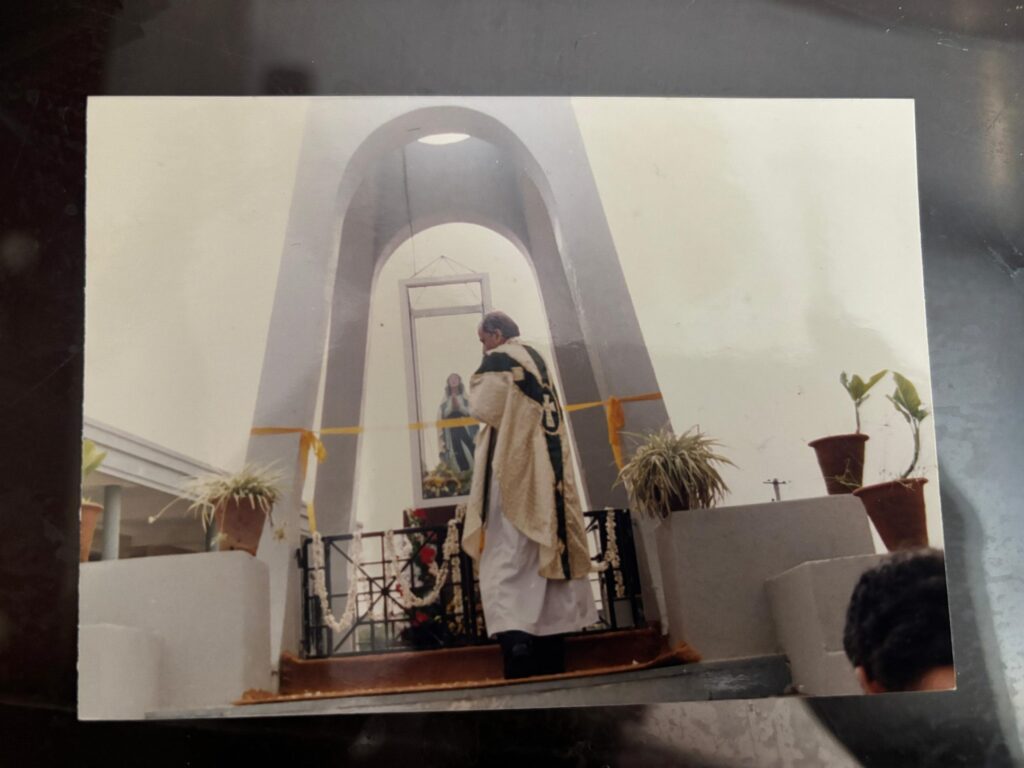
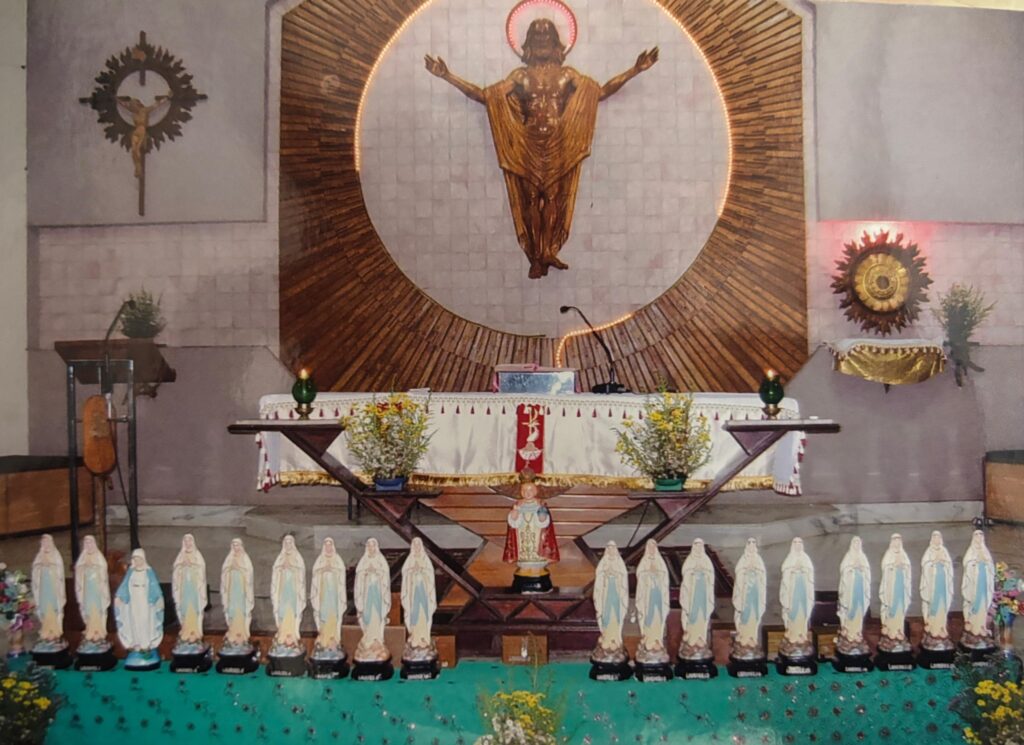
During this time, around 1973-74, a small Church, dedicated to Our Lady of Lourdes, was built by the Salesians with the help of the people. After building the church, the catechism was taught regularly, the liturgy was conducted with proper preparation and devotion; Sacraments were monitored and were organized well. In the beginning everything was conducted in Telugu as this was the only language majority people spoke. There were about 200 families altogether, comprising the areas of Seegehalli, Dodda Basavanapura, Chikka Basavanapura and Swathantra Nagara.
Our Lady of Lourdes Church, Lourdunagara, was not an independent parish till 1983. No priest was residing here. The priests and brothers were residing at KJC and were carrying out their pastoral woks from there very effectively. Nevertheless they sought the help of the Salesian sisters from Avalahalli. Regular catechism, faith formation and religious instructions were carried out with enthusiasm.
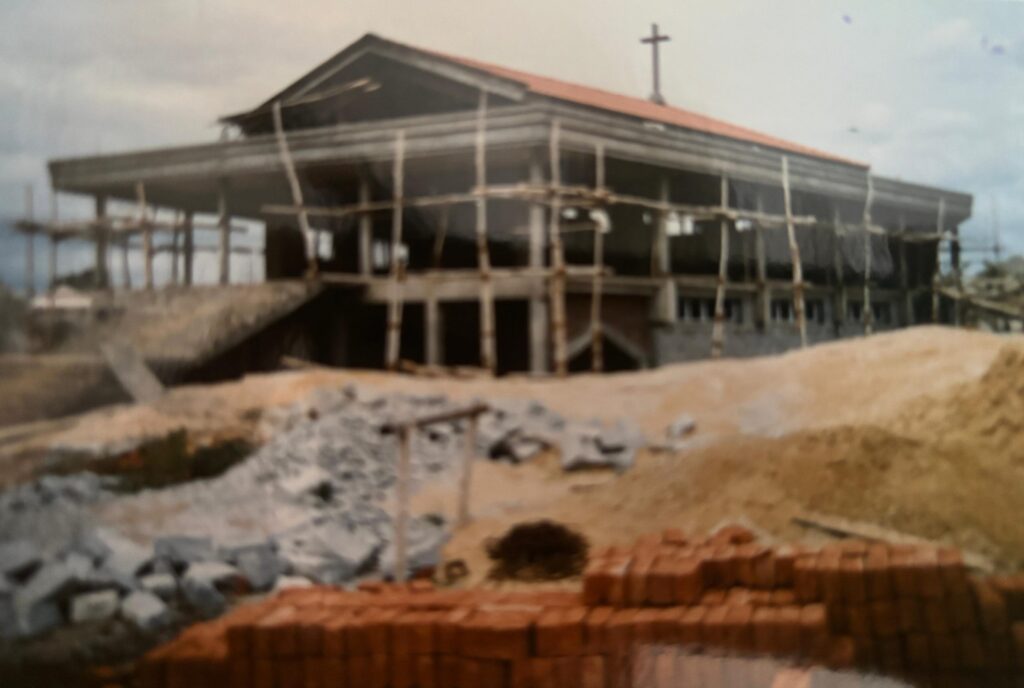
When this sub-station was made as an independent parish, Fr. Mathew Vadakkel, sdb, of Bangalore province, was made the first parish priest. After him Fr. P.I. Thomas, sdb served as the parish priest till 1992. They were staying in KJC and looking after the parish from there. After them Fr. Jolly Jacob sdb, was appointed as the parish priest. He was the first resident priest here. During his time a new church was constructed and completed in 1996. He organized and expanded the parish with his ardent zeal for evangelization and re-evangelization. The areas of pastoral care were expanded now upto Hosakote to the east, Medahalli to the north, Hoodi railway line to the south, Sadaramangala to the south-east and Devasandra to the west. The Salesian sisters in Avalahalli and Fatima Sisters in Hosakote became part of this parish. Number of houses and families grew steadily and the parish grew in quantity and quality.
Seeing the growth of the parish and the work involved, the superiors then sent an assistant priest to help out in all pastoral works with the parish priest. During the time of Fr. M.K. Sebastian, sdb, who was the parish priest after Fr. Jolly Jacob, Hosakote became a sub-station, where the liturgy was organized in the chapel of Fatima sisters, whose provincial house and a formation community was located at the same place.
Till 2006, Hosakote was under the pastoral care of Lourdunagara Parish. In 2006, the archdiocese made it into an independent parish by assigning a priest from the diocese. The liturgy and other religious activities continued to take place in the chapel of the sisters.
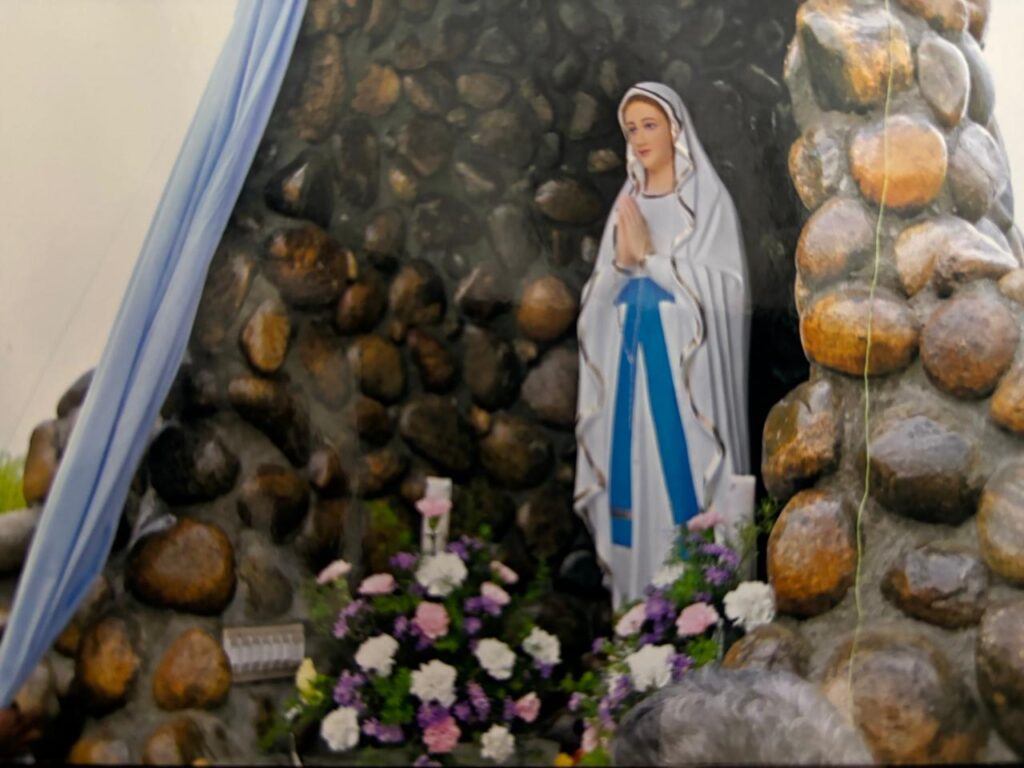
Fr. K.O. Varghese, who became the parish priest after Fr. Sebastian, had one less place under his pastoral care. By the time the number of families grew around the main church and the surrounding places were occupied with people from other places. The number of families now grew up to 350. During his time, the new concept of Way of Light and a grotto of Our Lady of Lourdes at the existing pond were constructed. This is something new and this can be seen only in a few churches in India. During his time, the parish was bit more organized and the BCCs [Basic Christian Communities] were formed, through which, importance for family prayer and unity was emphasized.
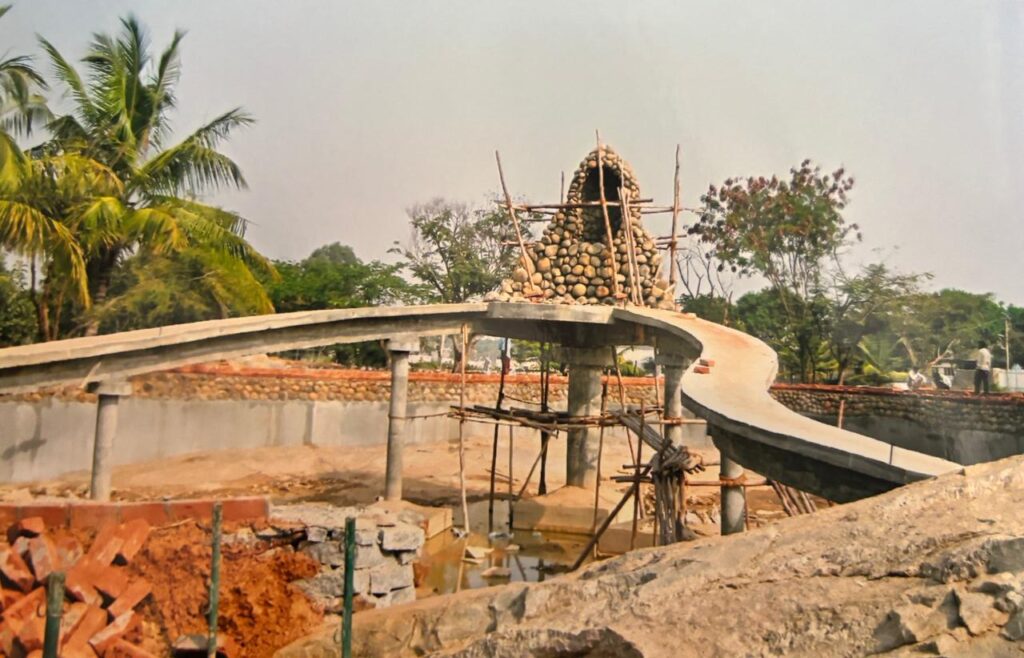
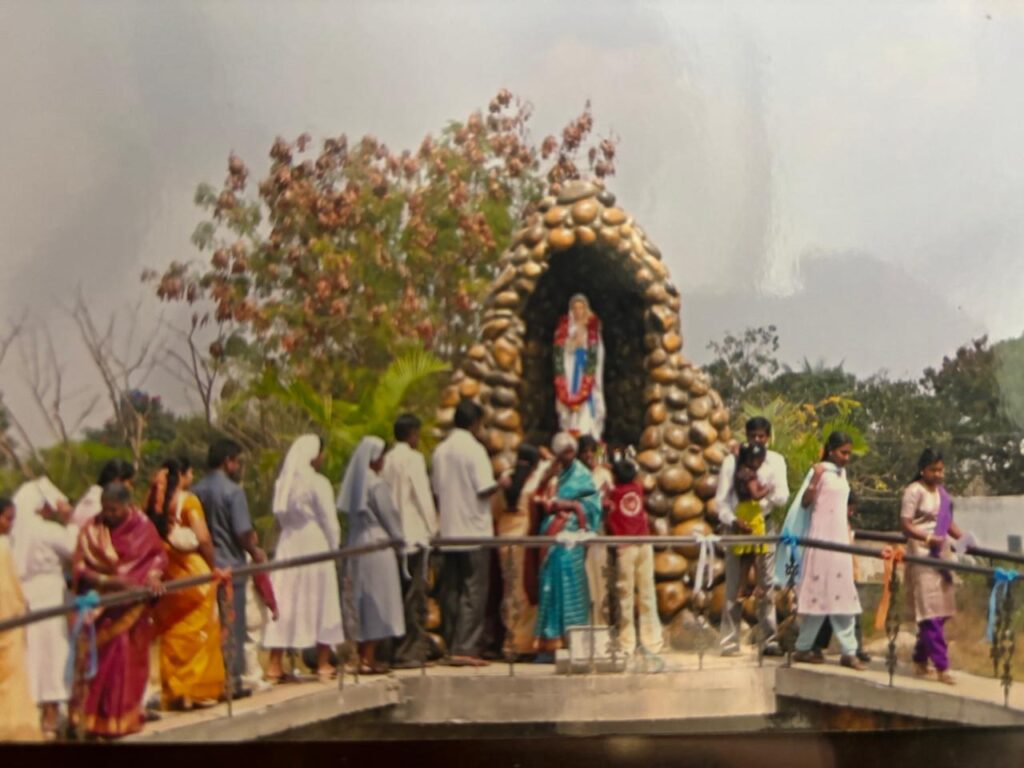
This work of building people in faith and organizing the parish were continued by Fr. C.P. Varghese, who succeeded Fr. K.O.Varghese. The unfinished works of the Way of Light was completed and other minor works were also successfully brought to completion during his time. It was during his tenure, in 2010, the areas of Avalahalli, Cheemasandra and surrounding places were formed into a new parish of St. Gasper at Kithaganur, which was entrusted to the care of Precious Blood Missionaries.
Fr. Jaimon took charge as the next parish Priest. It was Fr. Henry Galbao who took charge as the next parish priest after Fr. Jaimon. As a good musician, he has immensely contributed to the growth of the choir of the parish. It was during his tenure, a flag mast was erected in front of the Church.
Fr. Dominic Sequeira took the reins of the parish from Fr. Henry Galbao. As a very joyful priest he won the hearts of all with his simple and lively homilies.
Fr. Jose Kuttiyanikkal took charge as the next parish Priest after Fr.Dominic Sequeira. It was under the pastoral care Fr. Jose that the SCCs were organized in an effective manner. As a real mils stone, he labored hard to construct the present Lourdes Community Hall. It is really a monument to remember the tenure of Fr. Jose’s pastoral ministry.
Fr. Xavier Edayodiel comes as a very simple and unassuming priest to take charge as the Parish Priest after Fr. Jose. As a true person of prayer and pastoral care, Fr. Xavier visited every family of the parish with real enthusiasm. Along with the pastoral care, he also achieved milestones like the laying of tiles in front of the Church, equipping the church with wooden pews, change of tabernacle, etc. After a s very short stay of 2 years Fr. Xavier went to Nepal as a missionary.
Fr. Varghese Chakkala sdb, the present parish priest took charge of the parish on 31st May 2024.